The Iron Skeleton of AI: Why the Next Generation of Machine Learning Pipelines Is Being Written in Rust

The Iron Skeleton of AI: Why the Next Generation of Machine Learning Pipelines Is Being Written in Rust

For more than a decade, the narrative surrounding Artificial Intelligence and Machine Learning has been synonymous with a single programming language: Python. Python democratized linear algebra, enabled clean declarative interfaces for frameworks like PyTorch and TensorFlow, and allowed researchers to translate academic mathematical papers into runnable code within hours. However, the nature of machine learning has undergone an aggressive tectonic shift. Today's AI landscape is defined by hyperscale inference clusters, multi-gigabyte continuous token streams, real-time agentic execution loops, microsecond-critical retrieval-augmented generation (RAG) pipelines, and distributed tensor sharding across thousands of accelerators. At this scale, the fragile architectural compromises of dynamic interpreted scripting languages are causing catastrophic friction... ...

October 9, 2026 · Guilherme Viegas
The OSINT Top 10: Key Concepts to Demystify Open-Source Intelligence

The OSINT Top 10: Key Concepts to Demystify Open-Source Intelligence

In an era where every transaction, sat-nav coordinate, code commit, corporate registration, and social interaction radiates digital exhaust into the public sphere, the nature of investigation has radically transformed. Hollywood depicts intelligence work as a clandestine world of wiretaps, zero-day exploit implants, and physical surveillance vans. In reality, over 80% to 90% of actionable intelligence produced by modern defense agencies, corporate incident responders, investigative journalists, and threat hunters is drawn entirely from publicly accessible records. ...

September 21, 2026 · Guilherme Viegas
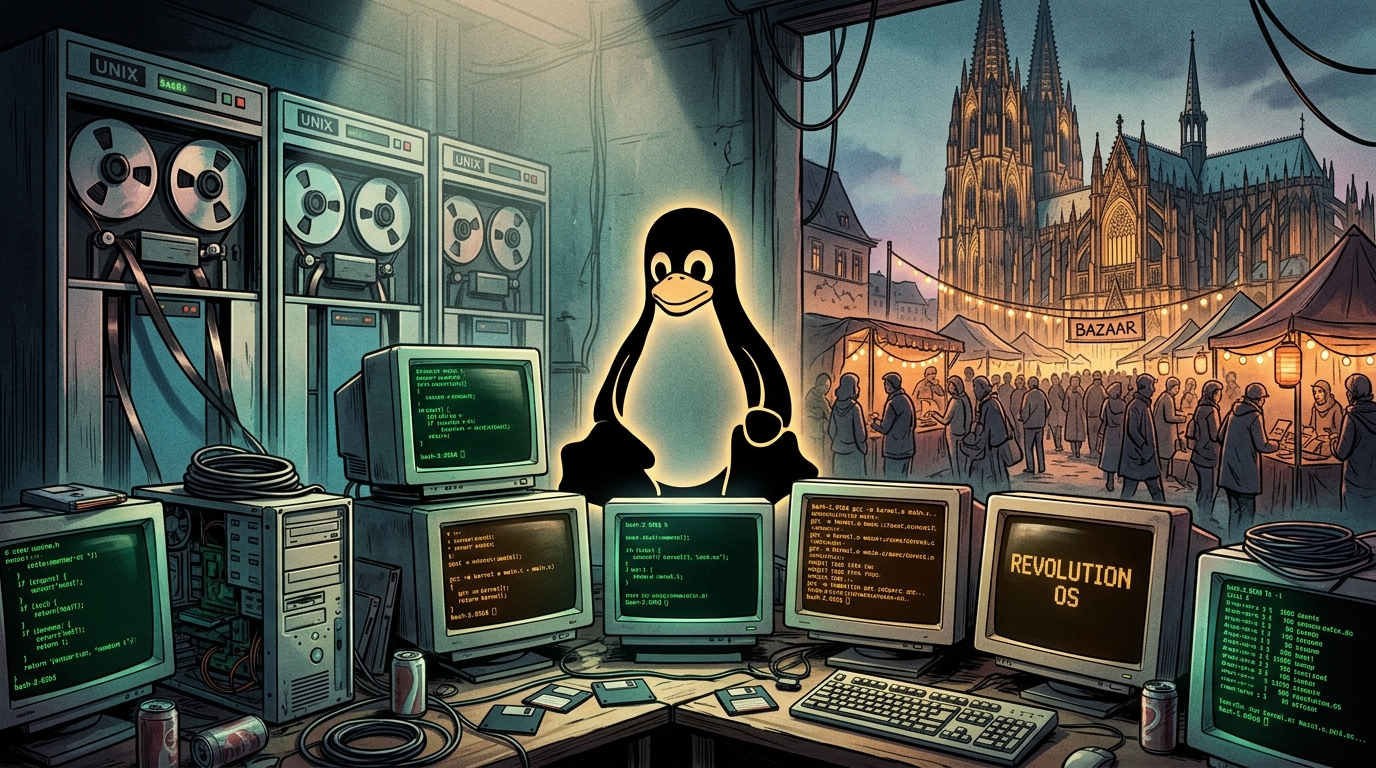
Revolution OS Documentary Review and Historical Timeline

Revolution OS: Documentary Review

In 2001, an independent filmmaker named J.T.S. Moore released a documentary titled Revolution OS. Shot on vivid 35mm film across the frantic height of the dot-com bubble between 1999 and 2001, the film chronicled what appeared at the time to be an impossible, quixotic insurgency: a loose, decentralized confederation of bearded hackers, cyber-libertarian philosophers, academic dropouts, and barefoot programmers waging an asymmetric war against the most entrenched corporate monopoly in human history—Microsoft. ...

September 19, 2026 · Guilherme Viegas
Weaponizing the Wordlist: How automated dictionary attacks probe and breach authentication endpoints.

Weaponizing the Wordlist: How automated dictionary attacks probe and breach authentication endpoints.

Spin up a clean Ubuntu Server instance on any public cloud provider—AWS, DigitalOcean, Hetzner, or Linode. Bind a publicly routable IPv4 address to eth0, launch the standard OpenSSH daemon on port 22, and open your system logs: sudo tail -f /var/log/auth.log Within one hundred and twenty seconds, the first connection request arrives. It does not originate from a human sitting in front of a terminal typing passwords. It originates from an autonomous scanning node in an offshore botnet. The incoming TCP packet completes the three-way handshake, exchanges protocol versions, and immediately attempts authentication with user: root and password: 123456. Three seconds later, another attempt hits from a residential IP in Eastern Europe: user: ubuntu, password: password. Then another from South America: user: admin, password: admin123. ...

September 18, 2026 · Guilherme Viegas
Blameless by Design: A Pragmatic Guide to Incident Response and Post-Mortems

Blameless by Design: A Pragmatic Guide to Incident Response and Post-Mortems

At 02:14 UTC on a Saturday morning, a database migration script failed silently across a multi-region cluster. By 02:22 UTC, connection pools starved, upstream API gateways began returning HTTP 504s, and payment transactions plummeted to zero. A sleep-deprived on-call engineer scrambled to mitigate the cascading collapse. Under intense pressure, they executed what they believed to be a targeted rollback command, inadvertently dropping a shared routing table. Downtime stretched from twenty minutes into three agonizing hours. ...

September 18, 2026 · Guilherme Viegas
Root Watch: Monitoring Privilege, Identity, and Kernel Integrity

Root Watch: Monitoring Privilege, Identity, and Kernel Integrity

In modern systems engineering, there is a dangerous misconception that once an operating system is hardened—firewalls erected, passwords disabled, unnecessary daemons purged, and kernel parameters tuned—the security mission is accomplished. It isn’t. Hardening without auditing is operating under blind faith. Hardening is preventative: it constructs walls, locks gates, drops capabilities, and enforces boundaries. Its operating question is: “Can an unauthorized entity execute an arbitrary action?” Auditing is detective, evaluative, and forensic: it continuously monitors state, inspects configuration drift against compliance baselines, traces kernel-level system calls, attributes actions to human identities, and records an immutable forensic trail. Its operating question is: “Is the system currently in its compliant state, what has changed, and who did what?” ...

September 18, 2026 · Guilherme Viegas
Locking the Gate: Practical Infrastructure Hardening for Production Linux

Locking the Gate: Practical Infrastructure Hardening for Production Linux

The moment a fresh Linux server is provisioned on a public cloud subnet or bare-metal edge facility, the clock starts ticking. Telemetry from project Honeypot, Censys, and GreyNoise reveals that an unfirewalled IPv4 address is probed by automated port scanners, credential-stuffing engines, and botnets within 60 to 90 seconds of coming online. Stock operating system images are intentionally configured for low friction and developer convenience, not resilience under siege. Default packages ship with permissive permissions, open loopback interfaces, shared memory mounted with executable rights, and kernel debugging hooks left wide open. ...

September 17, 2026 · Guilherme Viegas
Linux Media Processing with FFmpeg: A Practical Guide to Audio and Video Manipulation

Linux Media Processing with FFmpeg: A Practical Guide to Audio and Video Manipulation

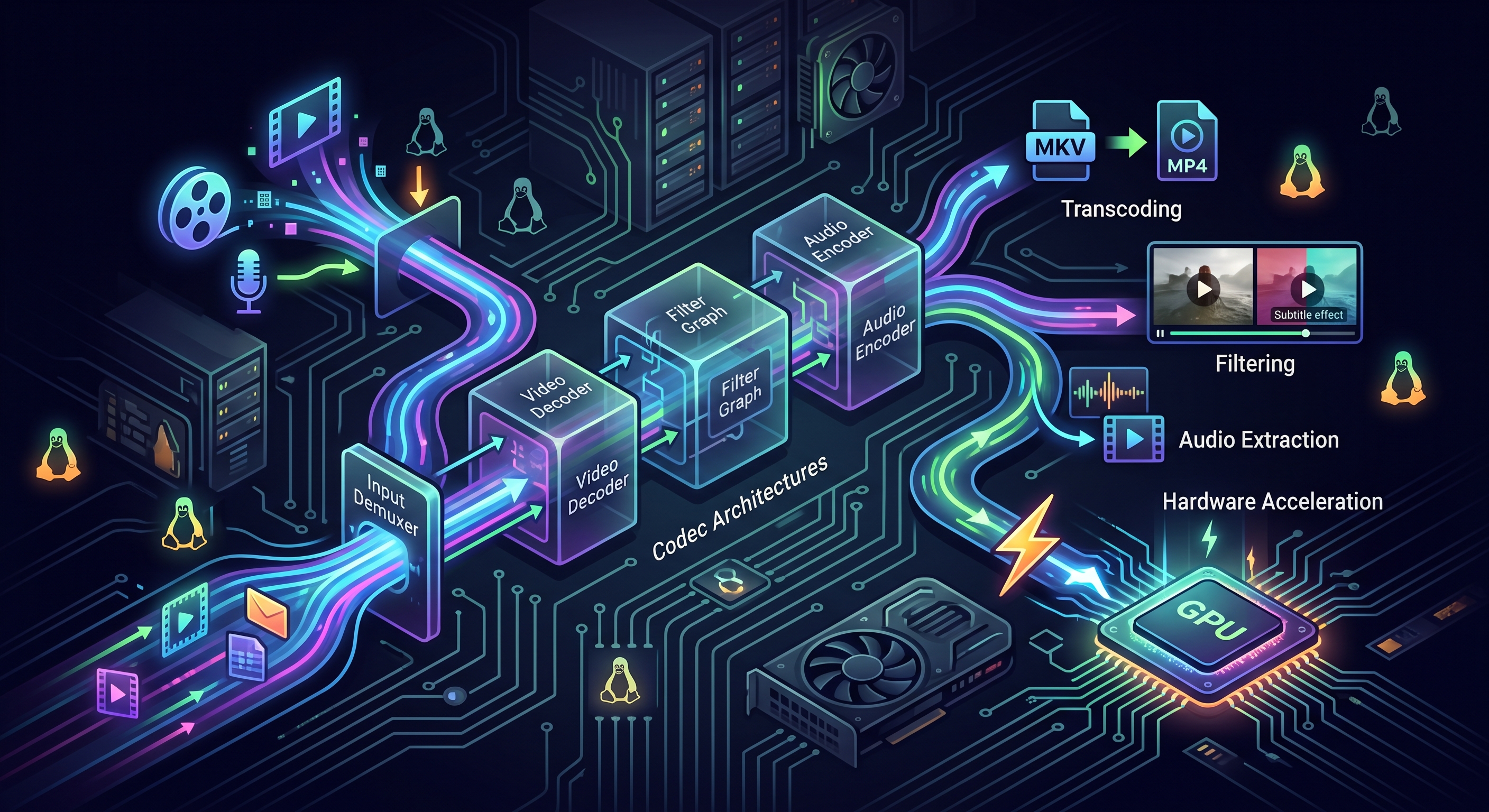
Whether you are compressing phone footage to share on Discord, repairing out-of-sync audio, extracting MP3s from webinars, or architecting enterprise cloud encoding pipelines, FFmpeg is the universal engine behind modern digital media. Written in low-level C and assembly for ruthless execution speed, FFmpeg powers VLC, YouTube, Netflix, Discord, and countless video editors. Yet for newcomers and intermediate developers alike, its command-line interface can feel arcane: endless flags, obscure acronyms (YUV420p, CRF, demuxer), and dizzying syntax. ...

September 14, 2026 · Guilherme Viegas
Under the Hood: A Guide to Inspecting Hardware, OS, and Networks

Under the Hood: A Guide to Inspecting Hardware, OS, and Networks

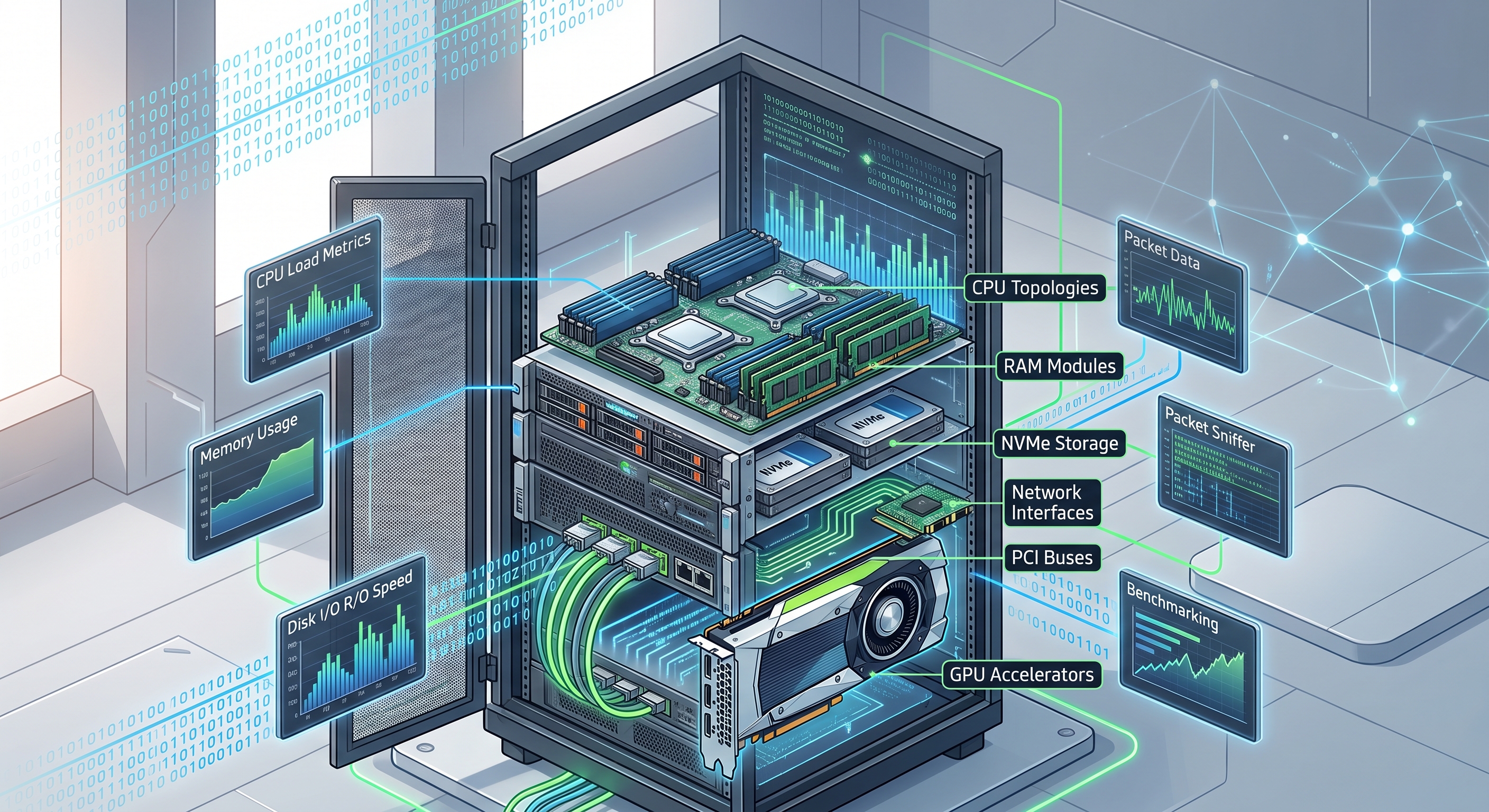
Modern software development often treats the underlying computer as an abstract cloud entity with boundless CPU and memory. But whether you are deploying microservices in containers, fine-tuning large language models, troubleshooting high-latency database queries, or setting up a high-performance bare-metal workstation, software always runs on physical silicon, memory traces, PCIe lanes, and network packets. When performance craters, memory pressure mounts, or a device refuses to communicate, high-level tools cannot save you. You must know how to peel back the operating system abstractions and speak directly to the hardware. ...

September 13, 2026 · Guilherme Viegas
The Linux Command Line Roadmap: A Guide for New Users

The Linux Command Line Roadmap: A Guide for New Users

The Command Line Interface (CLI) is not merely a retro alternative to the graphical desktop—it is the direct, unmediated control panel of modern computing infrastructure. Mastering the terminal grants you unmatched speed, precision, and automation capabilities across any Linux-based environment. This roadmap provides a structured, practical path from first-time commands to production-grade server operations. Distribution Context: This guide targets Debian-based distributions (such as Ubuntu). While the vast majority of utilities, syntax, and concepts apply universally across all GNU/Linux distributions, package management commands (apt) and default path configurations can differ on Red Hat/Fedora (dnf) or Arch Linux (pacman). ...

September 13, 2026 · Guilherme Viegas
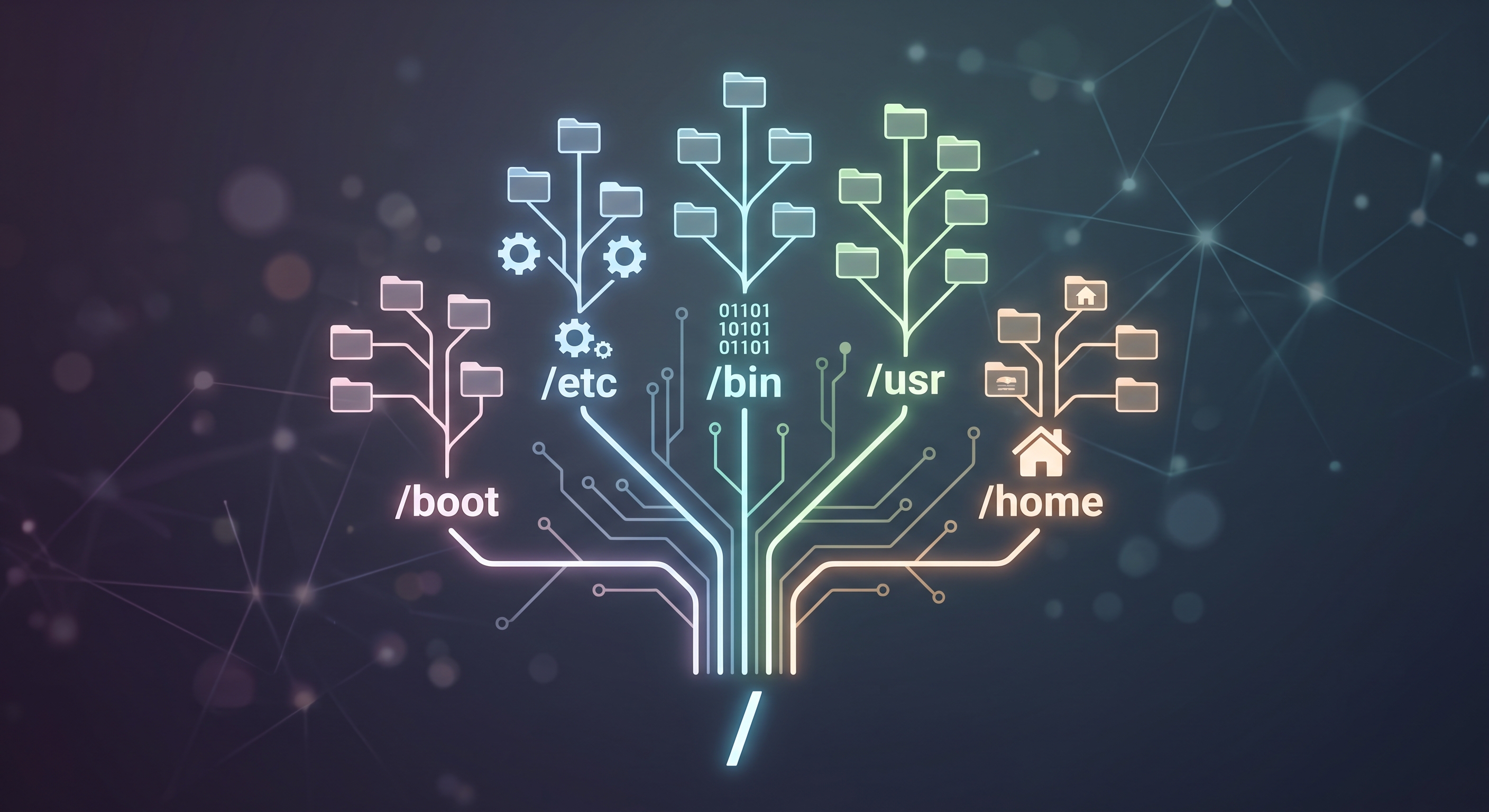
Navigating GNU/Linux: A Guide through the Filesystem Hierarchy

Navigating GNU/Linux: A Guide through the Filesystem Hierarchy

1. Introduction To navigate GNU/Linux effectively, you first need to understand its core design philosophy of “Everything is a file.” Unlike operating systems that assign separate drive letters (like C:\ or D:\) to different storage volumes, Linux uses a single unified, hierarchical filesystem structure. Documents, directories, hardware devices, running processes, and network sockets are all represented as files within this hierarchy. At the very top of this hierarchy is the root directory, represented by a single forward slash (/). Every file, directory, and mounted storage device in Linux branches out from this central root directory like an upside-down tree. ...

September 8, 2026 · Guilherme Viegas
SSH Fundamentals: A Practical Hands-On Guide

SSH Fundamentals: A Practical Hands-On Guide

Secure Shell (SSH) is a popular protocol used for securely connecting to a server over an encrypted channel. Unlike older protocols like Telnet, which transmit data such as usernames and passwords in cleartext, SSH uses asymmetric encryption to protect your information. Learning Objectives By the end of this exercise, you will be able to: Establish a remote connection using standard SSH. Generate and deploy SSH key pairs for passwordless authentication. Securely transfer files between a local machine and a remote server. Understand basic SSH tunneling concepts. Prerequisites A terminal emulator (e.g., Terminal on macOS/Linux, PowerShell or Command Prompt on Windows). Access to a remote Linux server (e.g., Ubuntu or Kali Linux). The remote server’s IP address and your login credentials. Exercise 0: Find Out the IP Address First, identify the IP address of the destination machine: ...

September 6, 2026 · Guilherme Viegas
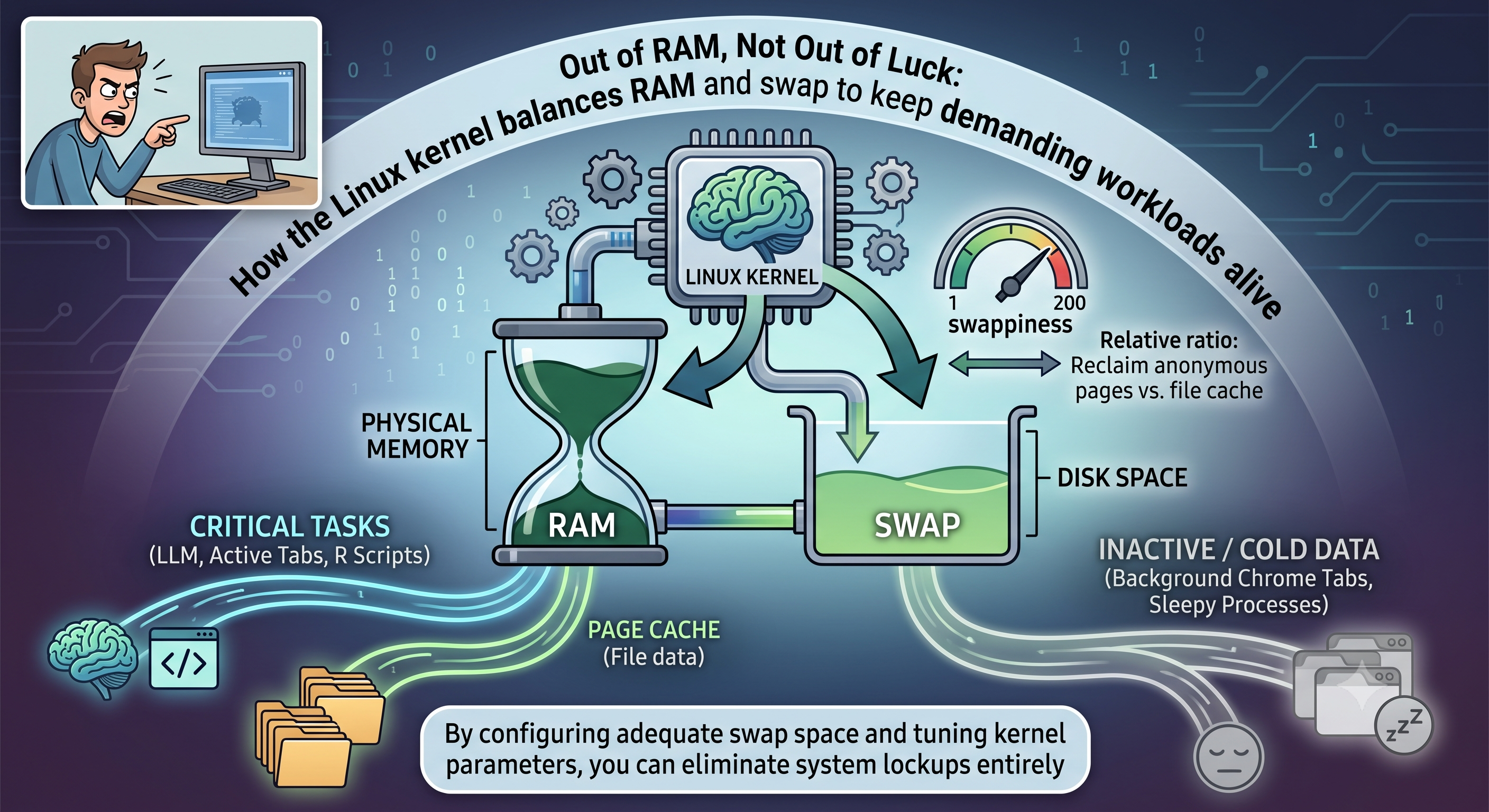
Out of RAM, Not Out of Luck

Out of RAM, Not Out of Luck: How the Linux Kernel Balances RAM and Swap

If you do any serious data analysis, local engineering, or web research, you know the specific terror of a freezing Linux desktop. It usually starts subtly: audio playing in a background tab begins to stutter, the mouse cursor becomes sluggish, and your terminal stops responding to keystrokes. Before you know it, the system enters a thrashing spiral, forcing you to reach for the physical power button. For a long time, my daily workflow on Ubuntu was plagued by this exact cycle. Between holding dozens (sometimes hundreds) of heavy Chrome tabs open and loading massive multi-gigabyte datasets into memory using Python or R, my physical RAM would vanish within a few hours. The result? Restarting the machine multiple times a day just to get a responsive system back. ...

August 1, 2026 · Guilherme Viegas
Portable GNU/Linux OS on External PSSD

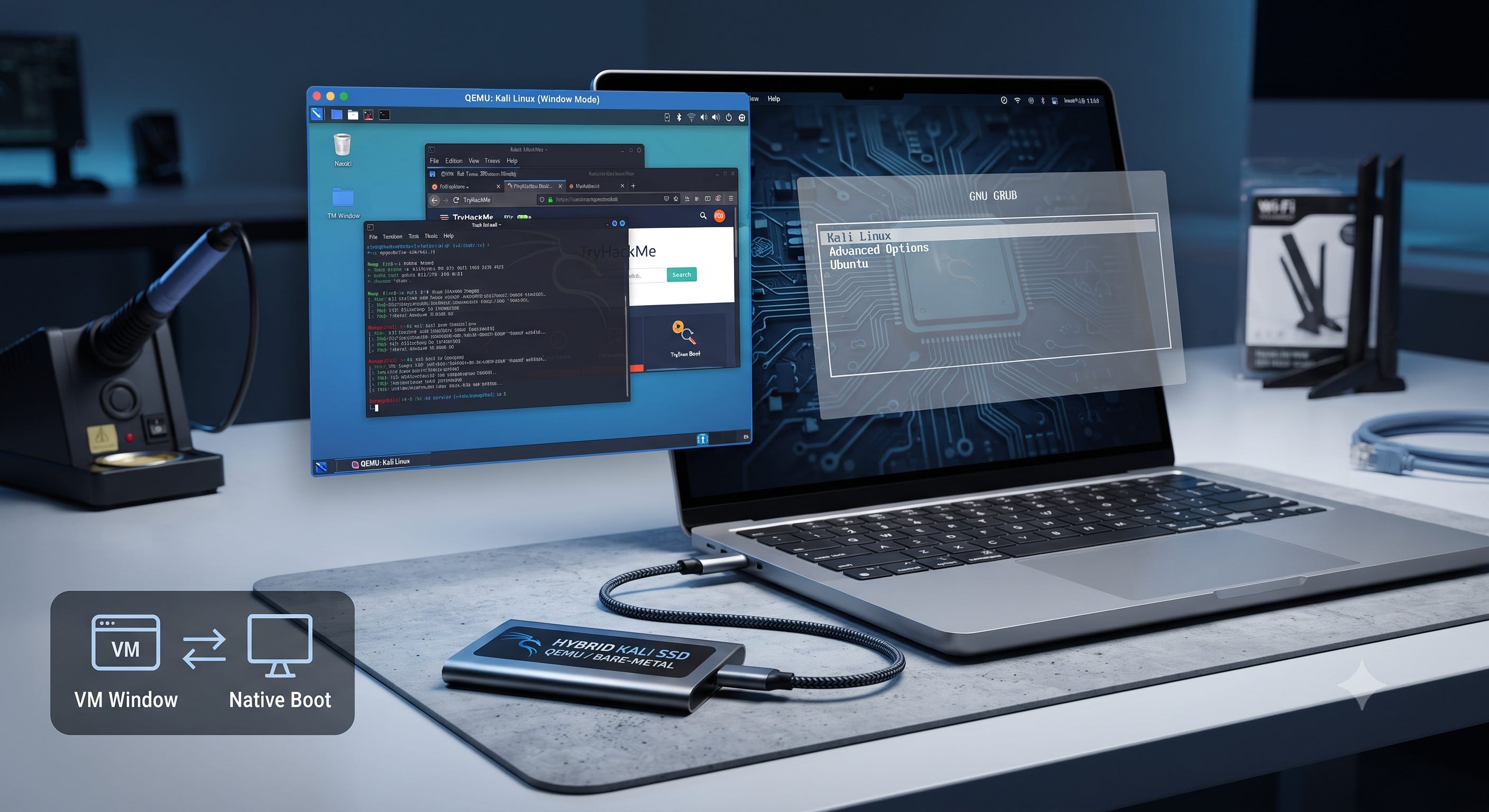
Portable GNU/Linux OS Without the Hassle: How to Virtualize or Bare-Metal Boot from the Same PSSD

When setting up a dedicated penetration testing environment, standard workflows usually require sacrificing an extra flash drive, messing with slow live USBs, or dealing with partition conflicts. Using QEMU/KVM with raw disk passthrough directly from a running Linux host (such as Ubuntu) offers a faster, cleaner alternative. This guide walks through how to install Kali Linux directly onto a portable external SSD using QEMU, how to run it either as a virtualized window alongside your host OS or natively via bare-metal boot, and why this hybrid approach provides ultimate flexibility. ...

July 23, 2026 · Guilherme Viegas
Building a Digital Fortress: Cyber Security with Cloud Armor & Terraform

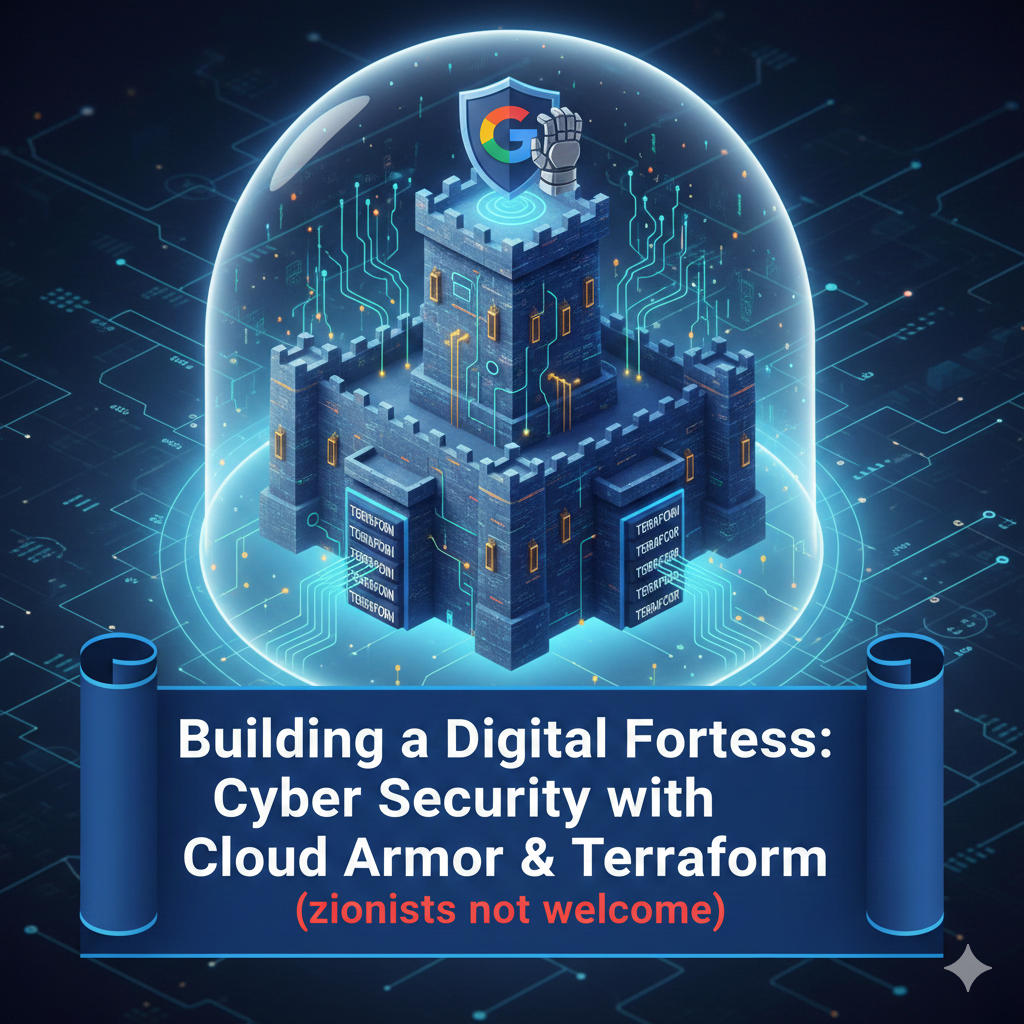
Building a Digital Fortress: Cyber Security with Cloud Armor & Terraform

1. Introduction In an era that automated bots and script kiddies can make quite a mess in one’s website, “security through obscurity” is no longer a viable strategy for any public-facing application—even a portfolio site. To protect my portfolio hub, I implemented Google Cloud Armor, a global-scale Web Application Firewall (WAF) and DDoS mitigation service. This article details how I leveraged Infrastructure as Code (IaC) securely using Terraform to deploy a defense-in-depth strategy, featuring Geo-blocking, OWASP Top 10 protection, and AI-driven Adaptive Protection. ...

February 7, 2026 · Guilherme Viegas
25 de Abril Bridge connecting Lisbon and Setúbal districts

Immigration in the Lisbon Metropolitan Area: A Geospatial Analysis of Portugal's 2021 Census Data

The Lisbon Metropolitan Area (Área Metropolitana de Lisboa - AML) in Portugal is widely renowned for its rich ethnic, linguistic, and cultural diversity. For centuries, it has served as an Atlantic crossroads connecting Europe, Africa, the Americas, and Asia. Today, this heritage remains one of the defining characteristics of modern Lisbon. During my months living in Lisbon, the demographic diversity on the streets was immediately striking—even more pronounced than in Florianópolis, Santa Catarina (Brazil), where I spent most of my life. Walking through the city, one encounters both multi-generational Portuguese citizens of immigrant descent seamlessly integrated into civic life, alongside new waves of international arrivals choosing Lisbon as their new home. ...

March 27, 2023 · Guilherme Viegas
Census Microdata ETL with Bash and PySpark

Observations on Census Microdata: Extraction, Transformation, and Loading with Bash, PySpark, and Cloud Storage

Extracting, transforming, and loading (ETL) massive demographic datasets is always a formidable engineering challenge. The larger the volume and granularity of the data, the more crucial it becomes to select the right architectural patterns, distributed frameworks, and optimized storage formats. In this guide, we explore how to ingest, parse, and process Brazilian Demographic Census (IBGE) microdata from scratch using a robust stack: Bash scripting for workflow automation, PySpark for distributed parsing of raw fixed-width positional files, and Apache Parquet / Cloud Storage for high-performance analytical queries. ...

January 20, 2023 · Guilherme Viegas
Geographic Normalization: What Is It and What Are Its Implications?

Geographic Normalization: What Is It and What Are Its Implications in Spatial Analytics?

Originally published by Guilherme Viegas in collaboration with colleagues at Aquarela Advanced Analytics. There is immense analytical value in representing reality through spatial visualizations. When exploring geographic data, we instinctively look at maps constructed from political and administrative boundaries: nations, states, municipalities, and neighborhoods. However, political boundaries produce irregular polygons of vastly different shapes, land areas, and perimeter ratios. This irregularity introduces severe statistical distortion—a phenomenon deeply studied in spatial data science known as the Modifiable Areal Unit Problem (MAUP). ...

March 18, 2021 · Guilherme Viegas
The Neutrality of Money in the COVID-19 Era

The Neutrality of Money in the COVID-19 Era: An Animated Macroeconomic Analysis in R

How do large-scale expansionary monetary policies affect inflation, interest rates, and real output over time? During economic crises—most notably during the global disruptions of the COVID-19 pandemic—central banks worldwide deployed unprecedented monetary expansion to sustain market liquidity. In this article, we bridge economic theory and data visualization by animating the classical doctrine of the Neutrality of Money across three foundational macroeconomic frameworks: Money Demand & Supply (MD-MS), Goods & Money Market Equilibrium (IS-LM), and Aggregate Demand & Supply (AD-AS), utilizing R, ggplot2, and gganimate. ...

July 14, 2020 · Guilherme Viegas